
Blog

Insights
Empowering a People-Centric Workplace: The AHRC’s Seven Standards

Steven Asnicar


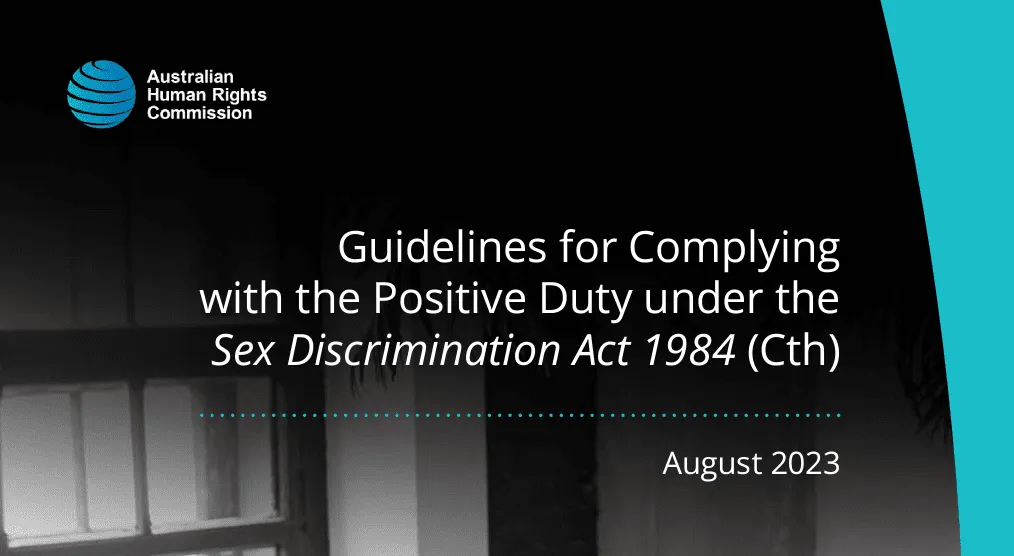
In a global landscape where human-centered design and social responsibility are now paramount, the way organizations treat their people has become a central measure of success. In Australia and New Zealand, this shift is not just a trend but a legal obligation. The Australian Human Rights Commission (AHRC) and the NZ Human Rights Commission has introduced a new “Positive Duty” under the Sex Discrimination Act 1984, requiring all businesses to take proactive and preventative measures to eliminate sex discrimination, sexual harassment, and other harmful behaviours.
In Australia this duty is supported by the AHRC’s Seven Standards, a comprehensive framework that redefines the roles of Boards, executives, and every staff member. It represents a fundamental shift from a reactive, complaint-driven model to a proactive, preventative one, placing people squarely at the center of cultural and operational change.
The Seven Standards: A New Mandate for Leadership and Staff
The Seven Standards are not just a checklist; they are a blueprint for fostering a safe, respectful, and inclusive workplace culture. They affect everyone, from the most senior leaders to the newest employee.
For Boards and Executives
The new obligations place the ultimate responsibility for creating a safe workplace on the shoulders of the company’s leadership. This isn’t just about governance; it’s about active, visible commitment.
- Leadership: Boards and executives are now required to set the “tone from the top.” They must not only understand their legal obligations but also actively role-model respectful behaviour and visibly champion the organization’s commitment to a safe culture.
- Risk Management: This is a significant change. Boards and executives must now treat relevant unlawful conduct as a health and safety risk. This means proactively identifying and assessing risks of sexual harassment and sex-based discrimination within the business, just as they would any other occupational health and safety hazard.
- Monitoring, Evaluation, and Transparency: Leaders must establish systems to collect data on a regular basis to understand the nature and prevalence of unlawful conduct within their organization. They are also expected to be transparent with staff about the company’s progress and the actions taken to address these issues.
For All Staff
Every person in the organization is a key player in this new framework. Their role shifts from being a passive bystander or potential victim to an active participant in maintaining a safe environment.
- Knowledge: The standard on “Knowledge” requires that all employees are educated on what constitutes respectful behaviour and what unlawful conduct looks like. It’s about providing ongoing, accessible, and high-quality training so everyone knows their rights and responsibilities.
- Support: All staff, regardless of whether they make a formal report, must have access to appropriate support systems. This includes confidential, person-centred, and trauma-informed support. The focus is on the well-being of the individual, not just on the legal process.
- Reporting and Response: The framework encourages a “no wrong door” approach to reporting. Staff must be confident that their concerns will be taken seriously, that they will not face victimization for making a report, and that the organization will respond to all reports in a timely, consistent, and harm-minimizing way.
By centering people in this way, the AHRC’s Seven Standards aim to create workplaces where prevention is the default, respect is the norm, and every individual feels safe, valued, and included.
The time for reactive measures is over. Boards and executives now face a clear mandate to move beyond mere policy and compliance to proactive prevention. This shift requires more than just good intentions; it demands a demonstrable Management Prevention Action Plan. By embracing this framework, leadership can transform the abstract concept of a safe workplace into a tangible reality, proving their commitment through measurable actions, transparent reporting, and continuous improvement. Ultimately, the ability to demonstrate such a plan will become the new benchmark for effective leadership, safeguarding not only the company’s reputation and legal standing but, most importantly, the well-being of every single employee.